Tuesday, November 25, 2008

Orange Payasam (Milk sweet with oranges)

For the longest time now I have been wanting to experiment using agave nectar entirely in Indian sweets but did not get around to it. Additionally this past few weeks I have been craving some kind of milk based sweet, every time I visit a friend's blog I seem to see some kind of milk based sweet which did not help matters either :-) Anyway the opportunity to do both presented itself when out of the loads of oranges I buy regularly in this season I landed up with a batch that seemed a little tangy. Normally on the rare occasions that I find myself with slightly tangy oranges I just toss the oranges in fruit salad with a host of other fruits.

But this time since I had been wanting to make payasam too, it got me wondering how payasam would taste if I used these oranges in it. Since there is no better way to know than to really try it, I decided to go ahead and see how this works out. At the end of the experiment, after thoroughly enjoying some of this payasam (tasting yummy stuff is one of the fringe benefits of cooking isn't it? ), I concluded that this was a successful experiment, the payasam turned out to be light, mildly sweet and fruity and the orange added an exotic touch to it.The saffron and oranges complemented each other and lent a pretty color to the payasam and from the reactions I received I would say this sweet is here to stay in my kitchen. :-)


Ingredients and method to make the orange payasam
3 1/2 cups milk ( I used 2 % but you can use whole milk)
few strands of saffron
pulp from 3 little oranges (approximately scant 1/4 cup)
1/4 cup agave nectar ( or substitute with 1/3 to 1/2 cup sugar according to taste)
3 tsp sugar (optional) (omit if using sugar instead of agave nectar)

Remove the outer skin of the orange, then remove and discard the inner thin skin and the seeds and just save and keep aside the pulpy part of the orange.

You know the drill, as with any other milk based payasam, the first step is to place the milk in a heavy bottomed  large pan and heat on a medium to medium high heat. When the milk comes to near boil,add saffron strands to the milk and  turn down the heat to medium to medium low and let it simmer for some time.

When the milk is on a low simmer add agave nectar (or sugar if you are using that ) and let it melt and mix with the milk.

When the milk is halved ( took me about 30 mins)  and is looking creamy in both color and texture, remove from heat and keep aside.

Let it cool THOROUGHLY  before adding the orange pulp to it. Do keep in mind, if orange pulp is added to milk before it cools completely the milk will curdle.

Chill this in the refrigerator for a few hours and serve cold.

Serves approximately 3

Notes:
If using very sweet oranges in this payasam, reduce the sweetness a little if you like mild sweets.

This is my entry into the Sweet celebrations event  being hosted by Aparna 

This is also my entry into the Vegetarian Thanksgiving Recipe Carnival  being hosted by Mansi.


Read more ...

Sunday, November 23, 2008

Mini Pepper Chutney

On my last trip to Trader Joes I saw these really pretty mini peppers that just called out to me to pick it up. So I did, with no specific plan on any dish to use it in.On the day when I was planning to make the sago dosai I wanted to try some new type of chutney and instantly these pretty peppers came to mind. I decided to use them in the chutney.

Since I was running low on time I did not try to find a new recipe for this chutney but just went on to make them with ingredients I like, and some that I try to sneak in because they are healthy.This chutney turned out very very mild and was not very spicy at all, so for those of you who like spicy chutneys you may want to increase the spice level in this. Also for those of you who are not able to get mini peppers this chutney would work just as well with any other type of bell pepper (capsicum).The texture of this chutney was nice and I thought it would have worked equally well as a dip for pita chips or for raw veggies.


Ingredients and method to make mini pepper chutney

1 yellow onion
4 tsp brown sesame seeds
4 tsp raw peanuts
3 red chillies
1 cup mini peppers cut into long strips (or equal amount of any bell pepper/capsicum)
1 tsp mustard seeds
1 very small piece tamarind (optional)
1 tbsp olive oil or any other oil
salt to taste

Dry roast raw peanuts and keep aside

Dry roast sesame and keep aside

Heat oil in a heavy bottomed pan and add mustard seeds to it,when the mustard seeds splutter add onions and saute for a few minutes until the onions become transparent.

Add red chillies to this and saute for a  minute or so.

Add the sliced mini peppers and saute until the peppers are cooked. 

cool this completely and grind along with the peanuts and sesame until smooth with very little water in a blender.

Add salt to taste and mix well.

Serve with raw veggies, pita chips or dosai/idli or even rotis.

This is my entry into the Culinarty original recipe event being hosted by Lore


This is my entry into Vegan Ventures Round 2 being hosted by Suganya

Related Recipes
Read more ...

Thursday, November 20, 2008

Javarsi Aval Dosai (Sabudana Poha Dosa/ Sago & Beaten Rice Crepes) Gluten Free


There is a story in our household regarding sago crepes. It so happened that quite some time back R and his family had been to a place called Bandipur National Park in India. This is a place where you get to see a lot of wildlife in their natural habitat. So  they have a lot of memories from that place and one of the memories was about how amazing it was to see deer and other wildlife when you looked out of the window at the cabin where they were staying. But in addition to the tales of these animals R and his parents always talk about one more thing from this place.....food....not something you expect someone to remember from their visit to a wild life sanctuary. 

Apparently in the place they were staying, there was this cook who on the day of their arrival offered to make them sago crepes(dosai). When he got it for them they were all completely blown away by the softness and taste of the crepe/dosai they were offered. They happily consumed copious amounts of bite sized little crepes/dosai and remember it until now. When the family sits together and is reminiscing about old times often this tale about their trip to Bandipur followed by the tale of sago dosai is almost always brought up.Unfortunately though none of them thought to take the recipe from that cook and this dosai and its memory has become a legend around our home. 

Sabudana Poha Dosa/ Gluten free Indian crepes photo 91c35a6f-e75d-4696-b352-a127fa77319b_zpsb0ab09b4.jpg

So now whenever I experiment with something in my kitchen and tell R I made it out of the top of my head R suggests to me that maybe I should try my hand at making the sago dosai.He has been ever hopeful that somehow I will be able to put together the ingredients of an item I have never even seen, let alone tried, and will be able recreate the exact same dosai he once enjoyed. What can I say, R is an eternal optimist when it comes to my cooking :-)   He helpfully gave me two clues to help me in my quest for the perfect sago dosai, he told me that that the dosai he had was soft and it had sago in it:-) 

Well that information has led me to experiment with various proportions of sago and other ingredients in dosai, sometimes with disastrous results, and sometimes like this one, when I hit upon something that tasted yum and that we enjoyed.This dosai has been the softest dosai I have had and had a very light and delicate texture and for those who like their dosai to be crunchy when made very thin and kept on the tawa for a bit longer it turned very crunchy too.

My search for the elusive Bandipur sago dosai/ crepe continues and at the very least this search has proven to be very interesting until now and has the fringe benefit of contributing to my collection of recipes in the process.

Javarsi Aval Dosai/ Sabudana Poha Dosa photo c9a5f15f-13d4-4942-b82e-821fd9ec9ca3_zpsa542aa2d.jpg


Ingredients and method to make Sago Rice crepe ( Sabudana Dosai)
1 1/2 cups brown rice (or white raw rice)
1/2 cup sago (sabudana/ Javarsi)
1/2 cup Beaten rice flakes/ flattened rice (jada poha/ aval)
1/2 cup cooked brown rice (or cooked white rice)
salt to taste
A few drops of sesame oil

Wash, drain and soak the rice in water for at least 4 to 5 hours

Soak sabudana in water ( the water should just cover the sabudana) for about 4 to 5 hours

Just before grinding, wash and drain the flattened rice and keep aside.

Grind the rice until smooth adding water as required. It should be free falling but not runny.

Grind the sago,cooked  rice and flattened rice together until very very smooth. Add water as required but keep this sago,cooked rice and flattened rice mixture thicker than the ground rice.

Mix both the ground mixtures together and add salt to taste and mix well.

Heat the tawa/griddle/flat pan on medium heat and when it is hot pour a ladle full of this batter in the center and spread quickly into a thin circle as possible.

Add a few drops of sesame oil on top and let it cook.

Flip over and cook the other side too.

Serve hot with Spice powder (molaga podi)  or chutney  or sambar.

Yields about 12 to 15 dosais (depending on size )

Variation: 
For those of you who like things spicy you could grind a couple of green chillies (or more or less according to taste) with the rice or the sago to spice things up a bit

Notes for Sago rice crepe

I used long grain brown rice( brown basmati) but any type of white raw rice can be substituted in its place.If you use white rice, this dosai will also look whiter and not have the creamish tinge mine had

The batter should be free flowing but thick not runny. For those of you familiar with both idli batter and dosa batter it should be thicker than dosa batter but a little thinner than idli batter.

If the tawa gets too hot the batter will start rolling even as you try to spread into a circle, so try and keep the tawa on a medium heat throughout.


Related Recipes


Read more ...

Tuesday, November 18, 2008

Simple and Quick Whole Wheat Pizza

The first time I made pizza from scratch including the crust was a long time back. In those halcyon college days when everything seemed adventurous and lack of ingredients or the long process involved did not faze me or my cousin who used to hang out with me and who joined me in my kitchen adventures.The first step in making the pizza involved a trip to various stores around our block armed with a long list of ingredients that included basics such as all purpose flour, yeast and marinara sauce, since all of these items were completely absent from my pantry in those days. My oven at that time was a tiny space ship shaped portable oven that had a small circular glass on the top that we would keep looking into to see how the baking was proceeding. Maybe it was beginners luck or maybe it was because we followed the recipe to the letter but our first attempt at pizza itself was a wonderful success.We thoroughly enjoyed both making and having it :-)

Wheat Pizza photo 
ba831b14-c807-4546-8268-38b92be0d413_zps83cf4744.jpg

After that one time of making pizza from scratch, pizza has always meant either dine in or to go, until recently when I started making my own pizza base again.  After several attempts and experiments with varying  different quantities of flours, I now have a version that has become my go to version for whole wheat pizza.
Updated to add: I have now included bread machine instructions at the bottom of the recipe

Simple wheat pizza photo e95e4318-5c8e-4c60-a194-7246763dfec5_zps3bf9c6be.jpg

Click here for a printable view of this recipe

For the crust.
2 and 1/4 cups whole wheat flour (atta)
3/4 cup all purpose flour (maida) (see notes)
1/4 cup vital wheat gluten flour (optional, see notes)
2 heaped tbsp cornmeal (makkai ka atta)
1 1/4 cup warm water
1 tbsp active dry yeast
1 tsp sugar
3 tbsp olive oil
1 tsp Italian seasoning (optional)
a little extra cornmeal for dusting.

For the toppings
Marinara sauce as required
choice of toppings (about 1 cup per pizza) (I have used any combination of onions, bell pepper (capsicum), mushrooms, jalapenos and pineapples during my various tries with this pizza and liked all versions)
Shredded Cheese as per choice
For cheese I tried a new type of grated cheese available in the grocery called pizza blend cheese which was a mixture of mozarella and cheddar, but you can use mozzarella cheese that is usually used in pizza too.
a little olive oil to apply on top (optional)
serve with a little crushed red pepper flakes (optional)

Dissolve yeast + sugar in warm water and keep aside for 5 to 10 minutes until slightly frothy

In a large bowl mix together all the flours, salt and Italian seasoning

Add water with yeast and olive oil to the flour mixture and knead. Knead for a few minutes, apply a tsp of olive oil to it and keep aside in a warm place to rise for about an hour. (I placed it in my oven with the oven light on so that it would provide some warmth)

After the dough doubles, flatten it a little and divide into two or three balls. Let the divided dough rise again for about an hour.

Pre heat oven to 425 deg F. Roll one of the balls of dough into a thin crust or regular crust with a help of a little cornmeal if required.If you are adventurous you could try tossing the dough to stretch it or use your fists to stretch and shape the dough too, I just rolled it out normally this time :-)

Once rolled out, brush on a little olive oil on top, then spread marinara sauce as required.

Add cheese as required, then toppings as per choice.
The copyright of this content belongs to Veginspirations.com

Bake in the oven for about 20 mins to 25 mins depending on thickness until the crust is crisp and the cheese is melted and slightly golden on the top. Sprinkle a few crushed red pepper flakes on top (optional) and enjoy the pizza while still hot.

If not using all the dough refrigerate the balance dough for a day or two and remove and use as required.

Yield will depend on thickness and size of crust. (I have gotten about 3 personal sized pizzas with this quantity or one extra large pizza base depending on how I rolled it out )

Notes: I have made this with all whole wheat flour too in the past, but find that a combination of whole wheat flour, all purpose flour and vital wheat gluten gives me the best results. If you get whole wheat bread flour that would be a good choice to use for this base, and you can skip the vital wheat gluten flour. Also you can reduce the all purpose flour to 1/2 cup and increase the quantity of whole wheat flour by the same quantity.

Bread machine instructions
Place all the ingredients in the bread machine pan in the order specified in the manual. Mine specifies, liquids first, then dry ingredients and lastly yeast. I used 1 tbsp bread machine yeast, and skipped the italian seasoning entirely. Set the bread machine to dough cycle, when completed, remove and proceed with the rest of the recipe.
Read more ...

Sunday, November 16, 2008

Microwave Masala peanuts revisited....

When I run out of snacks at home and the mood for munchies strikes me, one of my favorite snacks is this version of microwave masala peanuts. This is really a simple, quick and tasty treat that makes a great tv time/ movie time snack.

 photo f1227908-a488-4e2f-b83c-05d2133d5e81_zpsd062d3cd.jpg

The very first post on this blog, I had posted another version of these masala peanuts. This version just uses chickpea flour (besan) and rice flour (chawal ka atta) Traditionally these snacks are deep fried, but I have been making this in the microwave for a long time now and find that it tastes just as good and is just as crunchy as the deep fried ones without the guilt associated with frying and the calories of course :-)

Microwave Masala Peanuts ~ Crunchy Peanut Snack

Click here for a printable view of this recipe

Ingredients and Method to make Masala peanuts

1 3/4 cup Raw peanuts (mungphali/kadalai/verkadalai)

1/4 cup rice flour (chawal ka atta/ arisi maavu)

1/4 cup chick pea flour (besan/kadalai maavu)

1 1/4 tsp salt (or according to taste)

1/2 tsp red chili powder (or according to taste)

1/8 tsp asafoetida (hing) (optional)

1/2 tsp garam masala (can be substituted with any other kind of curry powder) or to taste

To know how to make your own garam masala check out this post

3 tbsp oil (any flavorless oil is fine)

scant 1/4 cup water


In a large wide glass dish or any other microwave safe dish, mix together all the dry ingredients.


Add oil to this and mix well.

Add water one tbsp at a time and mix well.


Place the dish in the microwave and heat for 2 mins initially.
The copyright of this content belongs to Veginspirations.com

Remove, break lumps and stir the peanuts and place back in microwave and repeat this process in 1 minute increments until done.

The time in the microwave will depend on the wattage of the microwave, it took me approximately about 7 minutes.


When the peanuts turn darker, into a deep rosy/red color it means it is done, it may still seem soft when you taste it while hot,but when it cools, the peanuts are crunchy.

Suggested Variation:
Skip the garam masala and add 1 tsp of fennel seeds (saunf/sombu) for a different taste and flavor
Read more ...

Thursday, November 13, 2008

Semolina Bread


Baking bread is something that a lot of my blogger buddies seem to do regularly and beautifully. Every time I saw a blog post on some one else's blog about bread baking I always wanted to try those recipes but somehow the thought of baking a loaf of bread seemed very daunting. Then I came across this encouraging post with a step by step pictorial on Divya's blog and thought this seemed like  a good place for me to start.

She mentions semolina flour in her post and I went to Whole foods to buy it, only to find that the semolina flour in the store looked and felt a lot like the fine semolina (fine rava) that I had in large quantities from the last time I had purchased that from the Indian store. I decided to try it with the fine rava I had at home but was a little nervous about it. My fears were unfounded as the bread worked out flawlessly and we loved the taste and texture of this bread. I mention this for those of you who have copious amounts of fine rava at home, you can use that to make this bread and save yourself a trip to the grocery :-)

It was not as dense and chewy as wheat bread and yet it was not exactly like the regular all purpose flour bread either. It was quite delicious and yum and for those of you who want to start baking bread this really is a good place to start or if you already are an expert baker try this for a change of pace...


Ingredients and method to make Semolina bread
3 1/4 cups semolina flour (fine rava/sooji)
1 tbsp sugar
1 1/2 tbsp instant yeast (I used active dry yeast)
1/4 cup olive oil
1 1/2 tsp salt
1 1/2 cup warm water

Dissolve yeast & sugar in warm water and keep aside for five minutes

Grease a bread loaf pan and keep aside

In a large bowl mix flour and salt.

Add the warm water and olive oil to the flour and knead well. Knead for about ten minutes.

Coat with a teaspoon of oil and keep aside to rise for a couple of hours.

Fold the dough three to four times and add to the greased bread loaf pan and flatten and keep aside to rise for another 2 hours

Pre heat oven to 375 deg F

Bake for about 35 to 45 minutes until the crust is golden brown 

Remove from oven and cool thoroughly.

Slice and enjoy.

This is my entry into the  bookmarked events  being hosted by Ruth.


Related Recipes

Read more ...

Tuesday, November 11, 2008

Creamy Vegan Mushroom curry ~ Khumb sabzi


Mushrooms are tasty, versatile, healthy and low in fat. Mushrooms contain 80 to 90 percent water and also  about 10 percent of their dry weight is made up of fiber making it an ideal food for people watching their weight. In addition mushrooms contain a great deal of potassium, a mineral that helps in lowering elevated blood pressure and also reduces the risk of stroke. Mushrooms are also a good source of selenium, riboflavin and niacin.

Northern Indian cuisine has curries that contain cream (malai) in their gravy. This is a very popular type of curry and a variety of vegetables are made with this type of gravy as their base. Since using cream is not very diet friendly, I had given up on making these type of curries for quite sometime.

On one of our long conversations when we were swapping health tips,my cousin S from Dallas told me that she substitutes cashew paste to give the gravy a creamy texture instead of cream and that it worked very well for her. 

This idea appealed to me and I tried it and loved the texture and taste that cashew gave the dish.So thanks to cousin S and her tip, here is a creamy mushroom curry that now makes regular appearances in my kitchen.

Creamy Vegan Mushroom Curry ~ Khumb ki sabzi

Click here for a printable view of this recipe

Ingredients and method to make Creamy mushroom curry

1 large onion (cut fine) (pyaaz/vengayam)
3 tomatoes blanched and chopped * see notes (tamatar/ thakkali)
4 cups button mushrooms quartered (khumb)
1 think sliver ginger (either ground or grated fine) (adrak/ inji)
1 tsp minced garlic (lehsun/ poondu)

salt to taste (namak/ uppu)

1/4 tsp turmeric (haldi/manjal podi)
1/4 tsp cumin powder (jeera / jeeragam powder)
1/4 tsp coriander powder (dhania)
1/2 tsp red chilli powder (or to taste) (lal mirch)
1/2 tsp garam masala (or to taste) (can be substituted with any other curry powder)
check out this post on how to make your own garam masala

1/4 cup cashew pieces (kaju)
2 tbsp oil
handful of cilantro for garnish (washed and cut fine) (coriander leaves/ hara dhania)

Soak the cashews in water for about 30 minutes. Grind into a smooth paste and keep aside

Heat oil in a large heavy bottomed pan and add onions to this and saute until the onions are transparent.

Add fine grated ginger and minced garlic and stir a few times.

Add chopped blanched tomatoes and saute until the tomatoes are soft and mushy

Add all the dry spice powders and saute for a few seconds.

Add the mushrooms and salt to taste,mix well and add water.

Let the mushrooms cook on a low to medium heat until done.
The copyright of this content belongs to Veginspirations.com
When the mushrooms are softened, add cashew paste and simmer for a minute. 

Add water to achieve required consistency, lower heat and simmer for a couple of minutes on low heat for the flavors to mingle.

Garnish with cut cilantro and serve hot with cumin rice, plain rice, roti  or any type of bread

Serves approximately 4

Notes

Heat water in a large pan. When water is hot, take the pan off the stove. Add tomatoes to the hot water and keep for a couple of minutes. You will see the skin on the tomatoes split slightly, remove the tomatoes from the hot water using tongs and place in another bowl with cold water in it. When tomatoes are cooler,  remove from water and peel off the skin. Chop the tomatoes and proceed with the rest of the recipe.

Related Recipes

Read more ...

Thursday, November 6, 2008

Oat Barley Adai ~ Dhal Dosa ~ Savory Indian Crepes made with oat, barley and mung bean

Barley is a type of grain that contains high levels of dietary fiber and selenium (which is a type of anti oxidant ). A cup of cooked barley provides 52 percent of the daily value of selenium.Selenium is an essential component of various metabolic functions like thyroid hormone metabolism, antioxidant defense systems and the immune function. In addition studies have shown that a diet high in barley helps in lowering LDL cholesterol (the bad one) and lowering high blood pressure.It may also help in stabilizing blood glucose levels.

After learning how much barley really benefits us , I felt very guilty that this super healthy grain does not appear in my recipes as much as it should. This got me thinking that maybe I should use barley in something like adai. Adai is a traditional savory crepe made with rice and three types of lentils and it belongs to cuisine from southern India. You will find the traditional recipe of adai here


Oat Barley Adai ~ Dhal dosa with moong dhal ~ Savory Indian crepes with oats and mung bean

I used the basic idea of adai and included both oats and barley in this recipe. We loved the final result of this experiment. For those of you familiar with adai the inclusion of barley and oats does not change the basic taste of adai very much and it still tastes a lot like the one with three lentils.


 Oat Barley Adai ~ Dhal Dosa ~ Savory Indian crepes with oats, barley and mung bean

Click here for a printable view of this recipe

Ingredients and Method to make  Barley Oats Adai

1 cup brown rice (or white rice) (chawal/ arisi)
1/2 cup split mung bean (Moong dhal/ pasi parappu/ paitham parappu )
1/2 cup quick cooking barley or pearl barley (jau/ vargodumai)
1/2 cup quick cooking oats

Thai green chillies (6-7) ( or according to taste) (hara mirch/ pachai molagai)
Dry red chillies (4) ( or according to taste) (lal mirch/ molagai vathal)
curry leaves (7-8 ) (optional ) (kadi patha/ karvapillai)
1 tsp chopped ginger ( optional )(adrak/ inji)
1/8 tsp Asafoetida (hing) (optional but recommended)
salt to taste (namak/uppu)

Few teaspoons of sesame oil (til ka tel/ nalla ennai) 

In a large bowl mix the first four items. Wash and drain these four grains together.

Soak these grains in sufficient water for about 3 hours.

Drain water and grind these grains in a blender/ mixer with the curry leaves, ginger if using, green chilies and red chilies with some water to help in the grinding process. 

This does not have to be ground very smooth, the grains could be of the texture of coarse semolina/ rava. 


The batter should be of pouring consistency but not too thin and runny. When in doubt err on the side of thicker batter, you can always add water later if needed to achieve correct consistency. 

Add asafoetida and salt to taste and mix well.

Heat a flat pan / griddle / tawa on medium high heat. When the griddle is hot pour a ladle full of batter and spread quickly and evenly to create a thin circle.

Pour a few drops of sesame oil on the side facing up. When the lower side is slightly browned, flip it over and cook the other sides for a few seconds.

When the other side has a few pinkish/ brownish spots, it can be removed.


Proceed with the rest of the batter in the same manner.

Yields approximately 15 crepes/ adais

Serve hot with spice powder or a little plain yogurt spiced with spice powder or just plain honey.

Notes:

In case of leftover batter,it could be kept in the refrigerator for a day or two and used as required

Do keep in mind that different green chillies and red chillies vary in their levels of spiciness so do adjust the quantity of green and red chillies according to taste

Related Recipes

Read more ...

Monday, November 3, 2008

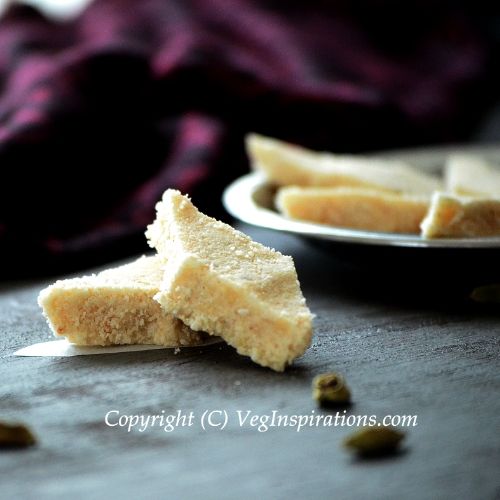
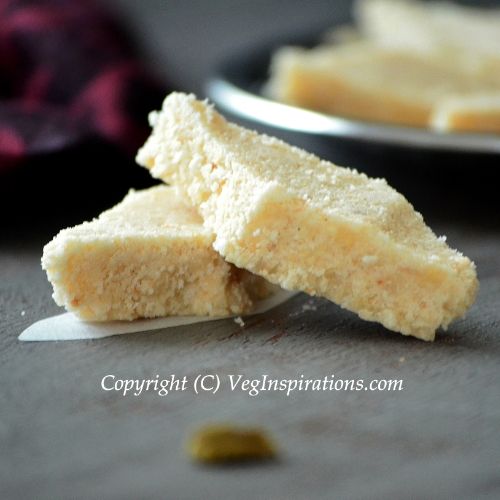
Rava Kaju Burfi (Semolina cashew Indian fudge)

Serendipity is described as an aptitude for making desirable discoveries by accident. Wondering why I am explaining the word serendipity as an introduction to a recipe post on my food blog? That's because the manner in which I landed up with this recipe can only be described as serendipity. The other day I was planning to make a sweet for a special occasion and wanted to make something with cashews. Now this in itself has to be a momentous event since I rarely think of making traditional sweets with sugar in them. Maybe I should have made another sweet to celebrate the fact that I made the first one....:-)

 photo 
90d033d7-002a-4d6e-872c-c20f35f6cf42_zpsa5abe3f8.jpg

Anyway getting back to the recipe, I mentioned to my in laws that I was planning to make some kind of cashew sweet that day. Co incidentally just a few hours before my call to them, some family friends had visited them and had gotten this delicious home made cashew sweet for them. When my father in law tasted the sweet he loved it and asked them for the recipe. They shared their recipe with him and he shared it with me and I got to try this sweet immediately.Talk about good timing huh.......so thanks to family friends and my father in law here is a sweet that is delicious and simple to make.

 photo ff15e11f-5311-4f6a-a669-eeaf3a409467_zps1574d1de.jpg


Ingredients and Method to make Rava Kaju Burfi

1/2 cup fine rava (fine semolina, semolina flour) 
1/2 cup cashewnuts (raw, unsalted) powdered fine (see notes)
1/4 cup fresh / frozen grated coconut (if frozen thaw to room temperature)
1 cup sugar (see notes)
1/3 cup water
4 to 5 green cardamom seeds powdered fine
2 tbsp clarified butter (ghee/nei) and a little extra for greasing the dish.

Grease a large flat dish with few drops of clarified butter and keep aside.

In a large heavy bottomed pan, dry roast semolina until it emits an aroma on low to medium low heat, remove roasted semolina into a plate/ tray.

Dry roast powdered cashew for a couple of minutes, not too much just a little. Remove and add this powder to the roasted semolina. 

In the same pan, dry roast grated coconut for a couple of minutes. Remove and add to the other two roasted items. Powder cardamom and add to the powdered mixture. 

In the same pan, add sugar and water and heat on low to medium low heat. When the sugar has melted and begins to thicken a little,lower heat,  add a drop of syrup to a plate, cool slightly and check to see if it has achieved one string consistency. Single string consistency means when the syrup is held between the thumb and forefinger and pulled apart, it will form a light single string. 
The copyright of this content belongs to Veginspirations.com

If the right consistency is achieved, keeping the heat low, add the powdered, roasted semolina+cashew+coconut mixture to it, then add clarified butter/ ghee and mix well. Allow to heat just a tad, when mixture begins to froth a little, remove and pour immediately on the pre greased tray/ dish. 

Cool and cut into square or diamond shapes. 

This quantity yielded me approx 18 to 20 pieces, yield will depend on the how thick or thin you spread the mixture and the size each square or diamond is cut. 

Store the burfi in an airtight container. It does not require any refrigeration and can be stored at room temperature for 4 to 5 days (if it lasts that long ) 

Notes:
With 1 cup of sugar this sweet is pretty "sweet" if you like you sweet milder, you can reduce the quantity of sugar to 3/4 cup.

When powdering cashews, use the pulse feature or short bursts of power in the blender/ mixer/ processor. Over processing can cause clumping because of the nut butter in the cashew.

Read more ...