
Thursday, July 29, 2010

Chawli/ Black Eyed Peas Pulao

 Most of you might have heard about CSN stores by now, for those of you who haven't, CSN stores is made up of more than 200 online niche shops offering a wide range of products. Whether you want a bathroom sink or some cookware, CSN stores seem to have just about everything. This time around I have been contacted by CSN stores to do a product review. So watch this space for the review in the near future!

Moving on to the other reason for this post. This pulao with black eyed peas was something I put together for a sunday lunch to go with methiwale gajar matar curry.The idea was to make something simple and flavorful  yet unique. I also wanted to try using some type of beans in the pulao. The reason I used black eyed peas was only because I conveniently had some on hand and wanted to use it up soon. Any type of beans like chickpeas or red kidney beans would have worked in this recipe.  With some raita this pulao could easily double as a one dish meal too :-)
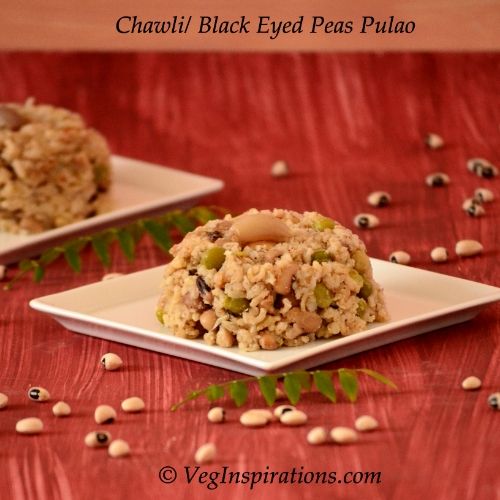
Chawli/ Lobia/ Black eyed peas pulao photo b44c4f23-788f-4a2e-b14d-0b42139aaa70_zps0f543479.jpg

Click here for a printable view of this recipe

Ingredients and Method to make Pulao with black eyed peas
1 1 /2 cups of brown basmati soaked in 2 1/2 cups of water for 30 minutes
2 cups frozen black eyed peas (Chawli/karamani)  (thawed to room temperature)
1 large onion cut fine
2 1/2 cups of mixed vegetables (any combination of cauliflower, peas, beans, carrots, corn )
2 tbsp oil
salt to taste
3 bay leaves

 Masala
1 inch piece of cinnamon
2 whole green cardamom
1 tsp coriander seeds
1 tsp cumin seeds
4 dry red chilies (or to taste)

Grind together the ingredients mentioned under masala, to a fine powder and keep aside.

Cook the black eyed peas on the stove top or microwave until it is half cooked, just a little soft but not very soft. Keep this aside
The copyright of this content belongs to Veginspirations.com

In a small pan, heat oil, add onions to it and saute until onions are transparent.Add the vegetables and stir them for a few minutes. Add the ground masala powder and stir a few times.

Place this sauteed vegetables, bay leaves, salt to taste and the soaked rice along with the rice soak water in the rice cooker container, place in rice cooker and set to brown rice setting.

When done, gently mix everything lightly and serve hot with curry of choice/ dhal / raita

Notes:
If you want to use dry black eyed peas , soak them in sufficient water for 6 to 8 hours. Drain water and semi cook them until almost done and proceed with the recipe as above.

You can make this with white basmati as well, just substitute with the same quantity of white basmati with water in the proportion of 1 : 1.5 or according to your manufacturers directions and set your rice cooker to the white rice setting.
Read more ...

Tuesday, July 27, 2010

Indian Style Tomato Soup (Tomato Shorba) and some humor :)

Before moving on to the post, here is a little bit of humor I came across recently.....

-------------------------------------------------------------------------------------------------------------
A young businessman had just started his own firm. He'd rented a beautiful office and had it furnished with antiques. Sitting there, he saw a man come into the outer office. Wishing to appear busy, the businessman picked up the phone and started to pretend he had a big deal working. He threw huge figures around and made giant commitments. Finally, he hung up and asked the visitor, "Can I help you?" The man said, "Sure. I've come to install the phone!"
-----------------------------------------------------------------------------------------------------------

Moving on, shorba is a type of soup made in Indian cuisine, specifically north Indian cuisine. It is a light soup usually with some seasonings. With the blistering heat we are facing these days,  light, quick to make and nourishing have become my keywords and almost all the items on my menu these days, reflect these traits.  This soup definitely fits the criteria on all of these counts and to top it all, this is one of the few soups that does not require a long list of ingredients, making it incredibly easy to assemble. All it needs are some good quality tomatoes along with a few seasonings. If you like tomato soup, this Indian variation may be something you might enjoy quite a bit....

Photobucket
Click here for a printable view of this recipe

Ingredients and Method to make Indian style tomato soup
12 to 14 small tomatoes quartered (yielded approximately 2 1/2 cups of tomato)
salt to taste
1 tsp jaggery (can be substituted with 1 tsp sugar)
1 tsp chick pea flour/ gram flour (besan)

seasoning
1 tsp oil/ or clarified butter (ghee) (use oil for a vegan version)
3/4 tsp cumin seeds (jeera)
1 Thai or Indian variety of green chili cut very fine (or to taste)

Cook the tomatoes along with some water until soft. Cool to room temperature, puree it and strain it through a sieve. Keep aside.

In a small bowl mix chick pea flour and a few teaspoons of water thoroughly, making sure there are no lumps. Add this chickpea flour + water mixture to the strained pureed tomatoes and mix well.
The copyright of this content belongs to Veginspirations.com

Add salt to taste, jaggery or sugar, water as required to achieve desired consistency and allow the puree to come to a boil on a low to medium low heat.

In a small pan, heat oil. Add cumin seeds and when it sizzles add green chilies. When the green chilies start to change color, add the entire oil+ seasoning mixture to the soup. Allow it to simmer for a few more seconds.

Serve hot as a first course for an Indian themed dinner/lunch.

Serves approximately 2 to 3
Read more ...

Friday, July 23, 2010

Thakkalli Mor Kozhambu ~ South Indian style kadhi with tomatoes ~ Buttermilk tomato curry ~ With Stepwise pictures

Ever wondered what the color choices you make, say about you ?  I never gave it a thought until I came across this fun test.  The test  asks you to first choose colors that you prefer the most, then the second time around, the colors you least prefer. When you are done, it gives you an analysis of your personality. Cool huh? and in my case the analysis in the end was pretty spot on too :-) Who knew our color choices revealed so much about our personality. It is something I am going to keep in mind for sure....:-)

Talking about colors and hues, here is a mor kozhambu that has a very unique hue to it.  As I mentioned earlier, mor kozhambu or buttermilk curry  can be described best as a soupy kind of curry that is served on a bed of plain steamed rice with a stir fry style curry on the side. For those of you familiar with the Gujarati Kadhi this is the south Indian cousin of kadhi :-)  It always fascinates me how many variations are available even in traditional recipes and how each small change makes a marked difference to the dish.

This variation of mor kozhambu is something that I learned from R's athai (aunt) when she was visiting us. It is one of the few variations of mor kozhambu that I make regularly. Tomato lends a nice flavor and a lovely color to the kozhambu. It also enhances the taste quite a bit, making this one of my favorite version of this kozhambu :)

Thakkalli Mor Kozhambu- South Indian style Tomato kadhi-Buttermilk coconut curry with tomatoes

Click here for a printable view of this recipe

Ingredients and Method to make Mor Kozhambu with tomato
1 large tomato cut fine (approx 2 cups of cut tomatoes)
1/8 tsp turmeric powder (haldi/manjal podi)
1/8 tsp sugar (shakkar)

3 Thai or Indian green chilies (or to taste)
2 dry red chilies (or to taste)
1/2 tsp cumin seeds (jeera)
3/4 tsp raw rice (chawal/pachai arisi)
4 tbsp fresh or frozen grated coconut (nariyal/thengai)( if frozen thaw to room temperature)

1 1/2 cups of yogurt (curds/dahi/thayir) mixed with 1 1/2 cups of water or 3 cups of buttermilk

Seasoning
3 tsp coconut oil
1 tsp mustard seeds (rai/kadagu)
1/2 tsp fenugreek seeds (methi dana/ mendiyam)
1 to 2 tsp dried curry leaves or 5 to 6 fresh curry leaves broken into small bits

salt to taste
handful cilantro (coriander leaves) cut fine

Cook the tomato with turmeric powder and sugar and a little water until it turns completely soft and mushy. Keep the cooked tomato aside to cool to room temperature. When cool, grind tomatoes along with green chilies, dry red chilies, cumin seeds, rice and coconut to a fine paste adding water as required to move the blades of the blender/ spice grinder.


Whisk together yogurt and water until smooth or use the blender to blend them together. If using buttermilk you can skip this step.
The copyright of this content belongs to Veginspirations.com

Heat the ground mixture stirring continuously. When it heats thoroughly, add buttermilk to it and mix well, lower the heat and heat the mixture until it begins to froth. Remove from heat and allow to cool. When the curry is slightly warm or at room temperature add salt to taste and mix well.


 Heat oil in a small pan, add mustard seeds to it, when seeds begin to splutter add fenugreek seeds and stir for a few seconds until it begins to darken very slightly. Then quickly add curry leaves, stir once or twice and pour the entire seasoning on the buttermilk curry.


Garnish with finely chopped cilantro and serve on a bed of hot rice with any curry of choice on the side or to go with some rice noodles (sevai) .

Notes
After the salt is added, buttermilk curry cannot be heated all the way through because it will split, at best it can be made warm so it is recommended to serve this with steaming hot rice after it has cooled or when it is served warm .
Read more ...

Wednesday, July 21, 2010

Thai Spinach and Sweet Potato Curry

With just one packet of spinach in my refrigerator and only a few sweet potatoes left in my pantry, I knew I was due to go grocery shopping very soon. In the meanwhile, I wanted to make something interesting with either one or both of them. I was not in the mood for the usual kind of Indian curries and thought something with Thai flavors would be great. A quick google search revealed this interesting recipe on Vaishali's site with the same combination of vegetables that I had on hand, how convenient :-)

I especially loved the part about adding whole peanuts to the curry. Cooked peanuts add such a wonderful taste and texture to any curry don't you think? I recently tried adding it to my pitla (bittergourd curry)  and loved how it tasted. I tweaked the recipe quite a bit, I changed the proportions of the ingredients. I also added some peanut butter to complement the flavors from cooked peanuts and reduced the quantity of coconut milk. The result was a creamy flavorful and surprisingly quick to make curry that we thoroughly enjoyed.

 Spinach And Sweet Potato Thai Curry with peanut butter

Click here for a printable view of this recipe

Ingredients and Method to make Thai Spinach and Sweet Potato curry
3/4 cup raw peanuts cooked until soft

3 large sweet potatoes cut into 1/2 inch pieces
1 pkt of spinach leaves cut into small pieces (about 9 oz/ 225 gms)
1 onion cut fine

2 tbsp oil
2 Thai or Indian variety green chilies
1 inch piece of ginger minced fine
1/2 tsp minced garlic
approx 10 Thai basil leaves cut fine (optional)
1 tbsp vegan Thai red curry paste ( I used Thai Kitchen brand) (or to taste)
1/2 tsp red chili powder (or to taste)
salt to taste
2 tbsp creamy peanut butter
1/2 cup coconut milk

Cook the raw peanuts on the stove top or the microwave with a little water until it is soft (I used the microwave).

Heat oil in a large heavy bottomed pan, add onions and saute until it is transparent. Add green chilies, minced ginger and minced garlic and stir for a few seconds.

Add sweet potatoes, thai paste and a little water, close the pan with a lid and allow the sweet potatoes to cook until they are soft yet firm.
The copyright of this content belongs to Veginspirations.com

Dilute peanut butter in a little water and add to the cooked sweet potatoes. Add spinach, salt to taste, red chili powder and cooked peanuts and allow to simmer for a couple of minutes. Not too long since spinach cooks really fast.

Finally add coconut milk and thai basil (if using) and allow to heat through on gentle heat.

Remove from heat and serve hot with steamed plain jasmine rice or any other plain steamed rice. ( I used brown basmati)

Serves approximately 2 to 3
Read more ...

Monday, July 19, 2010

Eggplant with Bell Pepper Curry ~ Baingan Simla Mirch Sabzi

Did you know that bell peppers are excellent sources of vitamin C & A, vitamin B6 and folic acid. The fiber found in bell peppers is also said to reduce the risk for certain types of cancer. Cool huh?  It doesn't hurt that bell peppers also taste great and can be used in virtually everything from salads, pizza toppings to curries making them as versatile as they are healthy.

In curries, I usually tend to use bell peppers in combination with other vegetables. It adds a certain flavor and taste to the curry that I like. In this case, I used it in combination with eggplants and in my book, this is a winning combination. This simple and quick curry is perfect with either phulkas or rotis but you could just as easily use it as a side dish to go with rice and dhal too.

Eggplant Bell Pepper curry ~ Baingan Simla Mirch Sabzi


Click here for a printable view of this recipe

Ingredients and Method to make Eggplant Bell pepper curry
12 small Indian eggplants cut lengthwise Or 1 medium large eggplant  (baingan/ katrikai)
1 green bell pepper (capsicum/ simla mirch/kodamolagai) cut into 1/2 inch pieces
1 large onion (pyaaz/vengayam) cut fine
2 medium tomatoes (tamatar/ thakkali) cut fine ( I used roma tomatoes)

2 tbsp oil
1 tsp cumin seeds (jeera)
2 Thai or Indian green chilies (cut fine) (or to taste)
1 inch piece of ginger (adrak/inji) minced
1/8 tsp turmeric powder
1/2 tsp garam masala (can be substituted with any other curry powder) 
salt to taste

Heat oil in a heavy bottomed pan. Add cumin seeds, when the seeds begin to crackle, add green chili stir a few times. Then add onion and saute until it is transparent.Add minced ginger, turmeric powder and garam masala and stir for a few seconds.

Add tomatoes and stir and allow to cook until soft and mushy.
The copyright of this content belongs to Veginspirations.com

Add bell pepper , eggplant, salt to taste and mix well. Put a lid on the pan and allow the bell pepper and eggplant to cook on a low to medium low heat.

When cooked, remove from heat and serve hot with rotis of choice. I served these with tomato multigrain rotis.
Serves approximately 2 to 3
Read more ...

Friday, July 16, 2010

Lentil Powder Sambar without any tamarind

Got curious didn't you, when you saw the title of this sambar ? I have to admit when I first saw this recipe on Asha's blog I was definitely very curious. The idea of making sambar without tamarind or cooked and mashed lentils was so intriguing. I have never tried something like this before, so I was very keen to try it asap. My only reservation was that R, who absolutely loves sambar may not appreciate my tinkering with his favorite food in this manner. Anyway my curiosity won out and I proceeded to make this sambar.

This has to be the fastest sambar I have made,even with powdering the masala and the paste it took me under thirty minutes to make it from start to finish.  I tweaked the recipe a little, added more vegetables and changed the quantities of the lentils just a tad. The taste of this sambar was just fantastic and both of us loved it a lot. I have already made this a couple more times since then. The sweetness of the ketchup is completely disguised by the spices and lentils and the texture of this sambar reminded me of the types of sambar we find in restaurants, just a little lighter texture than the home made ones.


Photobucket

Click here for a printable view of the recipe

Ingredients and Method to make Lentil Powder Sambar
1 large onion cut into 1/2 inch pieces
3 large carrots cut into 1/4 inch pieces
3/4 cup frozen green peas
1/2 cup tomato ketchup ( I used heinz)
salt to taste

Dry Roast and Grind (Masala)
1 1/2 tbsp coriander seeds
1 tsp pepper corns
3 dry red chilies (or to taste)
1 tbsp dried curry leaves

Paste
Heat 1 tsp of of oil and roast the following
1 1/2 tbsp of split chick pea lentil (chana dhal/ kadalai parappu )
1 1/2 tbsp split pigeon peas (Tur dhal/ tuvaram parappu)
1 1/2 tbsp mung lentil (moong dhal/ paitham parappu)
until it is reddish and aromatic. remove cool and grind to a smooth paste with a little water

Seasoning
1 tbsp oil
1 tsp mustard seeds
1/8 tsp asafoetida powder (hing)
1 dry red chili (optional)

In a heavy bottomed pan, dry roast each of the ingredients mentioned under masala until fragrant and aromatic. Cool to room temperature and grind in a spice grinder to a fine powder. You can make this powder ahead and store in an airtight container for a few days to save time when you are making the sambar.

For the paste, heat 1 tsp of oil and roast each of the ingredients mentioned under paste separately on low to medium low heat until reddish and aromatic. Take your time and do this slowly as on high heat the lentils will redden from outside without roasting all the way through. Cool to room temperature and grind to a fine paste using water as required.
The copyright of this content belongs to Veginspirations.com

In a heavy bottomed pan, heat oil, add mustard seeds. When seeds start to splutter add asafoetida powder and dry red chili (if using) and stir a few times. Add onion and saute until onion is transparent. Add carrots and green peas, add a little water and allow the vegetables to cook until they are soft yet firm and retain their shape.

Add tomato ketchup, some more water to achieve required consistency, the powdered dry masala, salt to taste and allow it to come to a boil.

Add the lentil paste and allow to heat for a few minutes, not too long, just enough for it to heat all the way through and the flavors to blend a little.

Remove and serve hot on a bed of steamed rice and a curry on the side, or with idlis/ dosais or with vadais

Notes
The spice powder is a little spicier than my usual sambar powder but it works well in this recipe because it offsets the slight sweetness imparted from the ketchup. If you use this spice powder in a tamarind based sambar I would suggest using a smaller quantity as it might turn too spicy if used in this same proportion.
Read more ...

Wednesday, July 14, 2010

Tomato Multigrain Roti ( Indian Flat Bread)

For the last few weeks we have seen record breaking heat in our area. The heat has managed to curb my enthusiasm and appetite for heavy or elaborate meals and I find myself gravitating towards light and nourishing food all the time. Simple and quick has become the new mantra whenever I am thinking about our dinner/lunch menus.

The blistering heat and the need to use up a little bit of tomato paste that I found in my refrigerator, were the main motivators for me to come up with this tomato roti. This was also the first time I used whey leftover from making paneer in a roti and I was pleasantly surprised at how much difference this one thing makes. The rotis turned out amazingly soft and were perfect in combination with the eggplant bell pepper curry that I made to go with it. ( I will post the curry recipe soon too )

Photobucket

Here is another view of the rotis.....

Photobucket

Click here for a printable view of this recipe

Ingredients and Method to make Tomato Roti

2 cups multi grain flour ( can be substituted with whole wheat flour/atta)
salt to taste
1/2 tsp red chili powder (or to taste)
1/2 tsp cumin powder
2 to 3 tbsp tomato paste ( I used canned paste)
approximately 1 cup of water or whey leftover from making paneer   if you have that (I used whey)

In a large bowl add multi grain flour, red chili powder, cumin powder and salt to taste and mix well.

Dilute 2 to 3 tbsp of tomato paste in a little whey or water and add to the dry flour.

Adding more water or whey as required knead flour to make a soft non sticky dough. Let the dough rest for a at least 30 minutes.

Divide the dough into equal lemon sized balls, with the help of a little flour (either wheat, multi grain or rice flour) roll out the dough into an even circle of desired thickness.
The copyright of this content belongs to Veginspirations.com

Heat a flat pan/ griddle/ tawa, place the rolled out dough on it and cook until the lower side gets very light pink spots. Flip over and cook the other side until it gets light pink spots too. Apply a few drops of oil/ or ghee if desired, these rotis were so soft that they did not require any additional oil/ ghee.

Serve hot with curry of choice.

Yield will depend on the size of each roti.
Read more ...

Monday, July 12, 2010

Paneer- Indian Cottage Cheese with step by step pictures

When I wrote about making paneer at home in an earlier post a lot of you wanted to know how it is done. Since I had not taken pictures that time, I had to wait until I made paneer again, to take some pictures and do this post. Finally, as promised here is the post on homemade paneer with the step by step pictures. Because  the lighting in my kitchen is not too great, the pictures are not great either, but I hope it gives you all an idea of the process and the steps.

Before moving on to the paneer, there is one other development that I would like to share with my readers. Some of you may have already heard of the Tried and Tasted event started by Zlamushka    This month the event is being hosted by Janet and she has chosen this site for this months theme. Thanks Janet for thinking of this site as a theme for your event. Ever since I have heard this news I have been alternating between excitement and nervousness.  Excited for obvious reasons and nervous that all the recipes that the participants try should work out well :-)

For those of you unfamiliar with this event, the whole premise of Tried and Tasted is that each month a blog is chosen and participants try something from that blog. Hop on over to Janet's announcement for more details on this event.

Photobucket

Ingredients and Method to make Paneer
7 cups whole milk
3 tbsp white vinegar ( I used a combination of both vinegar and lemon since I did not want the vinegar to overwhelm the flavor of paneer, you can use only lemon juice if you want too )
3 tbsp lemon juice


The first step is to prep your colander. Place a colander such as this one, on a large heat safe container. The container should be large enough to hold all the whey when the cheese is strained. Line the colander with a thin cloth, something like a muslin cloth or cheesecloth.
In a large heavy bottomed pan, bring whole milk to a boil. The milk may rise a little before you add the vinegar/ lemon juice so make sure that the container has some room for that.
I have heard that you can flavor the cheese by adding spices/ herbs to the milk at this stage so that the cheese will have some flavor. I have not tried it, mostly because I like my paneer plain and I find that  unflavored whey is more versatile as compared to flavored whey.


Once the milk begins to boil and rise, add vinegar or lemon juice one tablespoon at a time. You can use a combination of the two and keep stirring with a spatula. As soon as the vinegar/ lemon juice is added the milk will begin to curdle and will look something like this.....

Continue to keep on heat, adding more  vinegar or lemon juice if required until the mixture looks like this.... I used a total of 6 tbsp of  vinegar+lemon juice for this quantity of milk. If the whey turns slightly greenish, then it means it is ready and can be removed from heat, if it is still milky then you need to keep on heat for a few more minutes.


Pour the curdled milk through the lined colander to strain the cheese
Twist the cloth gently to make sure that the cheese strains entirely


Place a small plat or flat object on top of the cloth and place a heavy object on top of it. I placed my marble mortar on top as it seemed to be the heaviest object in my kitchen.Let the paneer/ cheese drain for about an hour or so. If it is strained too long then it will lose its moisture and become rubbery, about an hour works out well for me.
In an hours time, remove the paneer and place in a ziploc bag and refrigerate, or cut into cubes and use in any recipe of choice. You can store the whey in a glass jar/ bottle in the refrigerator and use it in making the dough for Indian flat breads/rotis/ phulkas, the rotis and phulkas end up becoming very very soft this way. I even use the whey in my chutneys instead of water when I am grinding the chutneys.


Paneer cut into cubes and ready to be used in cooking :-)

Read more ...

Thursday, July 8, 2010

Eggless Choco banana cereal muffins

The funny thing about pantry space is that it tends to get filled up real fast and before you know it, it's time to reorganize to fit in fresh supplies. At least that is the way it always works out at my place. As a result every few weeks I end up making a special effort to use up some of the items in the pantry so that I can free up some space.

This muffin I made a few days back, was a result of my pantry cleaning spree :-) I had this box of chocolate flavored rice krispies that I purchased a few months back for visiting relatives. It has been lying in my pantry since then. I hate to waste stuff, and since R and I do not have very sugary cereals, I had to come up with an alternative method to use up the cereal. I added rolled oats, multi grain flour and banana to the muffins to make it a little more healthy. This is the first time I combined banana and chocolate together and was a little wary of how it would turn out, but this combination really works well together.  The muffins turned out moist and tasty and are perfect for a quick breakfast on the go :-)


Photobucket

You can see how the texture of this muffin turned out from this picture......

Photobucket

Click here for a printable view of this recipe

Ingredients and Method to make Eggless Choco Banana cereal muffins
2 1/2 cups of choco flavored rice krispies ( I used Kelloggs brand cocoa krispies)
1/2 cup rolled oats
1/2 cup multi grain flour (or whole wheat flour)
1/2 tsp salt
2 tsp baking powder
1/2 tsp baking soda
2 tsp cocoa powder
1/4 cup sugar + 2 tbsp sugar if required

1 large overripe banana mashed (yielded about 1/2 cup of mashed banana)
1/2 cup oil
upto 1/4 tbsp milk to be added a tbsp at a time as needed

Pre heat oven to 350 deg F

Line muffin tin with paper or grease the muffin tin and keep aside

In a large bowl, mix together the first eight ingredients.

Mix together mashed banana + oil and add to the dry ingredients mixing slowly.
The copyright of this content belongs to Veginspirations.com

If required add one tablespoon of milk at a time and keep mixing till the mixture is completely moist but thick.

Spoon the mixture into the paper lined muffin tin until it is about 2/3 rd to 3/4th full and place in the oven. Bake 25 minutes or so, until cake tester/ toothpick inserted in the center comes out clean.

Remove and serve warm.

Yielded about 12 regular sized muffins.

Tastes best fresh or within a day of baking.
Read more ...

Tuesday, July 6, 2010

Slow Cooker Bisi Bele Bhath ~ One dish meal with rice, lentils and veggies

The slow cooker is turning out to be quite useful in my kitchen. When I first bought it, I thought I would use it mainly for dishes like dhals, rajma and payasams/Kheers, which need slow cooking and a lot more attention on the stove top than I am willing to devote to it. I never really thought I would end up using it to make rice dishes like bisi bele bhath. Bisi bele bhath is a traditional dish from southern India made with rice, lentils and vegetables. It is a perfect one dish meal and quite filling especially when made with brown rice instead of white rice. My stove top version of this dish can be found here

This dish requires the rice and lentils to be well cooked making it the ideal for the slow cooker. The first time I made this in the slow cooker, I cooked the rice and lentils entirely in the slow cooker and it took me about 5 to 6 hours to complete it. But the last couple of times I made this in the slow cooker, I pre cook the rice and lentils a little and then use the slow cooker, this reduces the slow cooker time to just around three hours making it perfect for weekend lunches, when I can set it and go about my errands and find lunch ready when I return :-)

Slow cooker bisi bele bhath ~ Crockpot one dish meal with rice, lentils and veggies


Click here for a printable view of this recipe

Ingredients and Method to make Slow Cooker Bisi Bele Bhath
1 1/2 cups brown rice (or white rice, see notes)
3/4 cup split pigeon peas (tur dhal/ tuvaram parappu)
small lime sized tamarind soaked in sufficient water to submerge the tamarind (imli/puli)

1 large onion cut into 1/2 inch pieces or 2 handfuls of pearl onions/ shallots (pyaaz vengayam)
2 carrots cut into 1/2 inch pieces
7-8 small Indian eggplants cut into 1/2 inch pieces
1 cup fresh or frozen green peas (optional)
(or about 2 to 3 cups of any other combination of vegetables like cauliflower, beans,peas etc)

2 Tbsp oil
1 tsp mustard seeds (rai/ sarson/ kadagu)
1/4 tsp asafoetida (hing/ perungayam)

For the masala
1 Tbsp split yellow chick pea lentil (chana dhal/ kadalai parappu)
1 Tbsp split black gram lentil (udad dhal/ ulatham parappu)
2 Tbsp coriander seeds (dhania/ kothamalli virai)


12 2  inch pieces of dry coconut (copra) or 1/4 cup fresh grated coconut

5 dry red chilies or to taste

Place rice and tur dhal in a large container, fill with water and swirl with hand a couple of times, then drain. Fill with 4 cups of water and let the rice and lentils soak for about 30 minutes.

Soak the tamarind in sufficient water for about 15 to 20 minutes, when soft, press tamarind and extract juice from it. Repeat once or twice until all the juice from the tamarind is extracted. Discard the pulp and seeds. I got about 2 1/2 cups of tamarind juice.

Dry roast the ingredients mentioned under masala until reddish and aromatic separately . If you are using fresh grated coconut instead of dry coconut, dry roast the fresh coconut separately until it turns reddish.Cool to room temperature and grind to a fine powder. If you are using fresh coconut, powder all the other ingredients, except the coconut and then add coconut too and powder again.

The copyright of this content belongs to Veginspirations.com

Heat oil in a large heavy bottomed pan. Add mustard seeds to it, when the seeds start to splutter, add asafoetida powder and stir for a few seconds. Add onion and saute until transparent. Add other vegetables and saute for a few minutes, not long enough to cook them just enough to start the process of cooking. Remove vegetables and place in container.

In the same pan, add tamarind juice and rice + lentils and the water it is soaked in and allow to come to a boil, then lower heat and allow the rice + lentils to cook for 15 to 20 minutes until at least half of the water has evaporated and the lentils and rice are half cooked and the tamarind has lost its raw flavor.

Remove and place the rice + lentils in the slow cooker, add vegetables, 2 cups of water and allow to cook on high for 3 hours. Add ground masala powder and salt to taste at half way point and stir a couple of times in between to ensure even cooking. Check to see if there is enough water and add more at half point if required.

Serve hot with chips/ papad, boondi raita or just enjoy it on its own.

Serves approximately 3 to 4

Suggested variation:
You can reduce the red chili by 1 and add 1/2 tsp of whole black pepper instead for the masala.

Notes
You can use white rice instead of brown basmati, but in that case you may need to set the slow cooker for lesser than 3 hours since white rice cooks faster than brown rice.

The masala can be made a day or two ahead to make things a bit faster when actually preparing the dish. Store bought masala can be substituted for the ground masala powder but I recommend trying the ground masala at least once, it really makes a huge difference to the taste of the final dish.

Read more ...